
Aesthetic medicine often centers on timing. There is a common misconception that aesthetic treatments are only for reversing visible signs of aging once they appear. However, modern aesthetic medicine focuses just as much on strategy and long-term planning as it does on immediate correction.
When it comes to neuromodulator treatment, the approach changes significantly depending on your starting point. The strategy for someone looking to delay the onset of fine lines is fundamentally different from the strategy for someone seeking to soften established wrinkles. Understanding these differences is crucial for setting realistic expectations and achieving outcomes that look natural and refined.
At Refine Med Spa, we believe that successful aesthetic care is not about chasing lines or freezing facial movement. It is about understanding your unique anatomy and developing a personalized plan that supports your skin health over time. Whether you are exploring preventative neuromodulator care or seeking corrective solutions, the key to success lies in a thoughtful, clinically guided approach.
What Is a Neuromodulator Treatment?
Before discussing long-term planning, it is important to understand the biological mechanism of neuromodulators. These are purified proteins used in medical aesthetics to relax specific facial muscles temporarily. Common brand names include Botox, Dysport, and Jeuveau, but the medical category is known as neuromodulators or neurotoxins.
Facial expressions are created by muscle contractions. When you smile, frown, or raise your eyebrows, the muscles beneath the skin pull and fold the overlying tissue. In youth, the skin is elastic and bounces back immediately after the expression passes. Over time, as collagen and elastin production decreases, these repeated folds begin to leave lasting marks. What starts as a dynamic line (one that only appears during movement) eventually becomes a static line (one that remains visible even when the face is at rest).
Neuromodulator injections work by interrupting the signal between the nerve and the muscle. This reduces the intensity of the muscle contraction, allowing the overlying skin to remain smooth. Unlike dermal fillers, which add volume to fill in hollows or deep creases, neurotoxins address the underlying muscle movement that causes wrinkles to form in the first place.
Preventative Neuromodulator Treatment Explained
The concept of preventative care in aesthetics is often misunderstood. It is not about freezing the face or starting injections before they are necessary. Instead, preventative neuromodulator care is a proactive strategy designed to delay the formation of static wrinkles.
In a preventative treatment plan, the goal is to retrain the facial muscles. By using smaller, strategic doses of neurotoxin treatment, an injector can limit the severity of skin folding without stopping muscle movement entirely. This allows you to maintain natural facial expressions while reducing the mechanical stress on the skin.
Think of the skin like a piece of paper. If you fold the paper repeatedly in the same spot, a crease will eventually become permanent. If you gently curve the paper instead of folding it sharply, the crease never forms. Preventative care effectively softens the “fold” of your facial expressions, preserving the smooth texture of the skin for longer.
Addressing Misconceptions About Starting Early
A common concern is that starting neuromodulator injections too early will make the face look older if treatments stop, or that the muscles will become dependent on the product. This is incorrect. If you stop treatment, your muscles simply regain their full range of motion, and the natural aging process resumes at a normal pace. You do not age faster; you merely lose the protective benefit the treatment was providing.
Who Is a Good Candidate for Preventative Care?
There is no specific “right age” to begin preventative care. The decision is based on skin quality and muscle strength rather than a number on a birthday cake. Some individuals have very strong facial muscles and expressive faces that create etching in the skin as early as their mid-20s. Others may not see significant lines until their late 30s.
Good candidates for preventative neuromodulator care typically exhibit:
- Expressive Patterns: You notice faint lines appearing when you frown or raise your eyebrows that disappear almost immediately when you relax.
- Family History: Your parents or older siblings developed deep frown lines or crow’s feet early in life.
- Skin Type: You have thinner or fair skin that is more prone to early etching compared to thicker, oilier skin types.
- Lifestyle Factors: You spend significant time outdoors in the sun or have high-stress habits like subconscious frowning while concentrating or looking at screens.
Corrective Neuromodulator Treatment Explained
Corrective care applies to individuals who already have established static wrinkles. These are lines that are visible even when your face is completely relaxed. At this stage, the skin has already been creased repeatedly, and the collagen structure beneath the line has been compromised.
Corrective neuromodulator treatment focuses on two goals: softening existing lines and preventing them from becoming deeper. When the muscle activity is reduced, the skin gets a break from the constant folding. This allows the body’s natural repair processes to smooth out the surface of the skin over time.
It is vital to have realistic expectations with corrective care. A single neurotoxin treatment will not erase deep, etched lines overnight. While the muscle will relax within days, the skin texture may take months of consistent treatment to improve. In some cases, a combination of modalities, such as skin resurfacing or dermal fillers, may be recommended alongside neuromodulators to achieve the desired result.
Who Benefits Most From Corrective Care?
Corrective treatment is generally suitable for patients in their 40s, 50s, and 60s, though this varies by individual. It is ideal for those who feel their facial expressions make them look tired, angry, or stressed even when they feel fine.
Patients who benefit most from a corrective approach often have:
- Static Wrinkles: Visible lines on the forehead, between the brows (glabella), or around the eyes (crow’s feet) at rest.
- Strong Muscles: Hyperactive muscles that pull the brows down or create deep furrows.
- Previous Gaps in Care: Individuals who have never had aesthetic treatments or who have gone years between appointments.
- Aging-Related Changes: Skin that has lost significant elasticity, requiring a more nuanced approach to avoid heaviness.
Key Differences in Treatment Planning
The difference between preventative and corrective care is not just about the age of the patient. It involves a distinct shift in dosage, placement, and long-term strategy.
Dosage and Intensity
In preventative cases, the goal is often “Baby Botox” or micro-dosing. The provider uses lower units of neuromodulator treatment to gently weaken the muscle. The objective is to keep the forehead smooth while retaining some movement.
In corrective cases, standard or higher dosing is often required initially. To smooth out an established wrinkle, the muscle must be significantly relaxed to stop the folding completely. If the dose is too low in a corrective patient, the muscle will continue to move, and the wrinkle will not improve.
Injection Placement
Preventative placement is often broader and lighter, focusing on the areas where tension is just beginning to build. Corrective placement is highly targeted. The injector must carefully isolate the specific muscle groups causing the deep creases.
Frequency and Consistency
Preventative patients may only need treatment twice a year to maintain results because their muscles are not fighting against deep-set memory. Corrective patients usually require strict adherence to a 3-to-4-month schedule. If the product wears off fully and movement returns, the wrinkle immediately begins to re-etch. Consistency is the most critical factor in corrective success.
Long-Term Strategy
For prevention, the strategy is maintenance and protection. For correction, the strategy is rehabilitation. The skin needs time without movement to repair itself. Over a year or two of consistent corrective treatment, many patients find their static lines soften significantly, allowing them to eventually transition to a maintenance dose.
Why One Size Does Not Fit All
Facial anatomy is as unique as a fingerprint. A standard pattern of injection points will not yield the same result for every person. This is why personalized treatment planning is essential at Refine Med Spa.
Facial Anatomy and Muscle Strength
Men generally have significantly stronger facial muscles than women and often require higher doses to achieve the same effect. Similarly, some people have a strong “eleven” line between the brows but a smooth forehead, while others have a very active forehead that creates horizontal lines.
Upper vs. Lower Face
Neuromodulators are most commonly used in the upper face, but they have applications in the lower face as well, such as slimming the jawline or lifting the corners of the mouth. The planning for lower face treatment requires extreme precision because these muscles control speaking and eating.
The Risk of Overtreatment
More is not always better. In corrective care, there is a temptation to use high doses to “wipe out” wrinkles. However, if the forehead muscles are completely frozen in an older patient with skin laxity, the brows can feel heavy or drop. A skilled injector understands the balance between smoothing wrinkles and maintaining a bright, open expression.
Long-Term Results and Maintenance
The true value of neurotoxins for wrinkles is cumulative. Whether your plan is preventative or corrective, the results improve with consistency.
When facial muscles are treated regularly, they gradually become conditioned. They “learn” not to contract as forcefully. For preventative patients, this means they may need less product over time to maintain their results. For corrective patients, it means that deep lines eventually become faint shadows that are easily covered with makeup.
Skipping treatments or waiting until full movement returns effectively resets the clock. To get the best return on your investment, sticking to the schedule recommended by your provider is essential. This ensures that you are always staying ahead of the aging process rather than constantly trying to catch up.
The Role of Medical Expertise
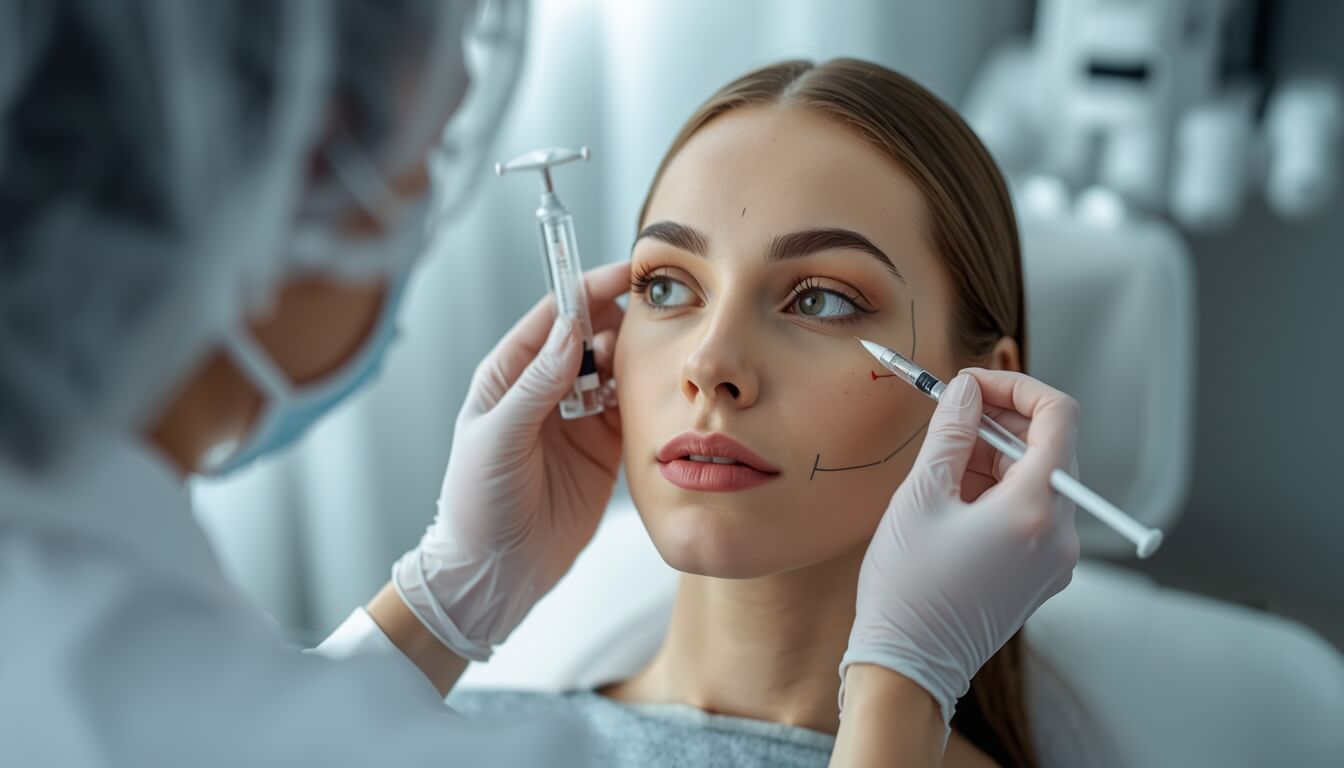
Neuromodulator injections are a medical procedure, not a simple beauty service. The safety and aesthetic outcome depend entirely on the skill and judgment of the provider.
An inexperienced injector may treat every face the same way, leading to unnatural results like a frozen forehead or Spock-like eyebrows. A medical provider with deep knowledge of facial anatomy understands the complex interplay between different muscle groups. They know that relaxing one muscle can cause another to pull harder, and they plan the treatment to maintain overall facial harmony.
At Refine Med Spa, we prioritize education and safety. We assess muscle depth, skin quality, and asymmetry before a needle ever touches the skin. This clinical approach ensures that your treatment plan is safe, effective, and tailored specifically to your goals.
Refine Med Spa’s Planning-First Philosophy
We approach aesthetic care with a philosophy of refinement, not alteration. Our goal is for you to look like the best version of yourself, not like a different person.
During your consultation, we take the time to discuss your history and your specific concerns. We look at how your face moves when you talk and smile. We discuss your lifestyle and your budget. This comprehensive assessment allows us to build a roadmap for your care.
We will tell you honestly if you are a candidate for preventative care or if a corrective approach is required. We will also explain what neuromodulators can and cannot do. If your concerns are related to volume loss or skin texture, we may suggest combining neuromodulators with other therapies for a holistic result. We believe in building trust through transparency and delivering outcomes that promote confidence.
Conclusion
The difference between preventative and corrective neuromodulator treatment lies in the strategy. Preventative care protects the skin from future damage, while corrective care rehabilitates the skin from past damage. Both approaches are effective when managed with clinical expertise and realistic expectations.
Age is just one factor in the equation. Your muscle strength, skin quality, and expressive patterns all play a role in determining the right plan for you. By prioritizing long-term skin health over short-term fixes, you can achieve a refreshed and revitalized appearance at any stage of life.
Whether you are looking to stop lines before they start or soften the signs of aging, the first step is a professional evaluation. Aesthetic medicine is a journey, and having a knowledgeable partner to guide your treatment planning ensures that you move forward with confidence and clarity.
Schedule Your Consultation
Discover the difference a personalized plan can make for your skin. Schedule a personalized consultation at Refine Med Spa to learn how neuromodulator treatment planning can support your long-term aesthetic goals.